In the last newsletter I wrote about Haiti. Now it is Bolivia's turn. Willy De Vylder, a friend and former church elder, went out in January and February to follow the construction of the clinic at our mission base in Tarija, to join a medical expedition, and to check the condition of the hospital car. He is a civil engineer in his seventies.
The clinic at Tarija
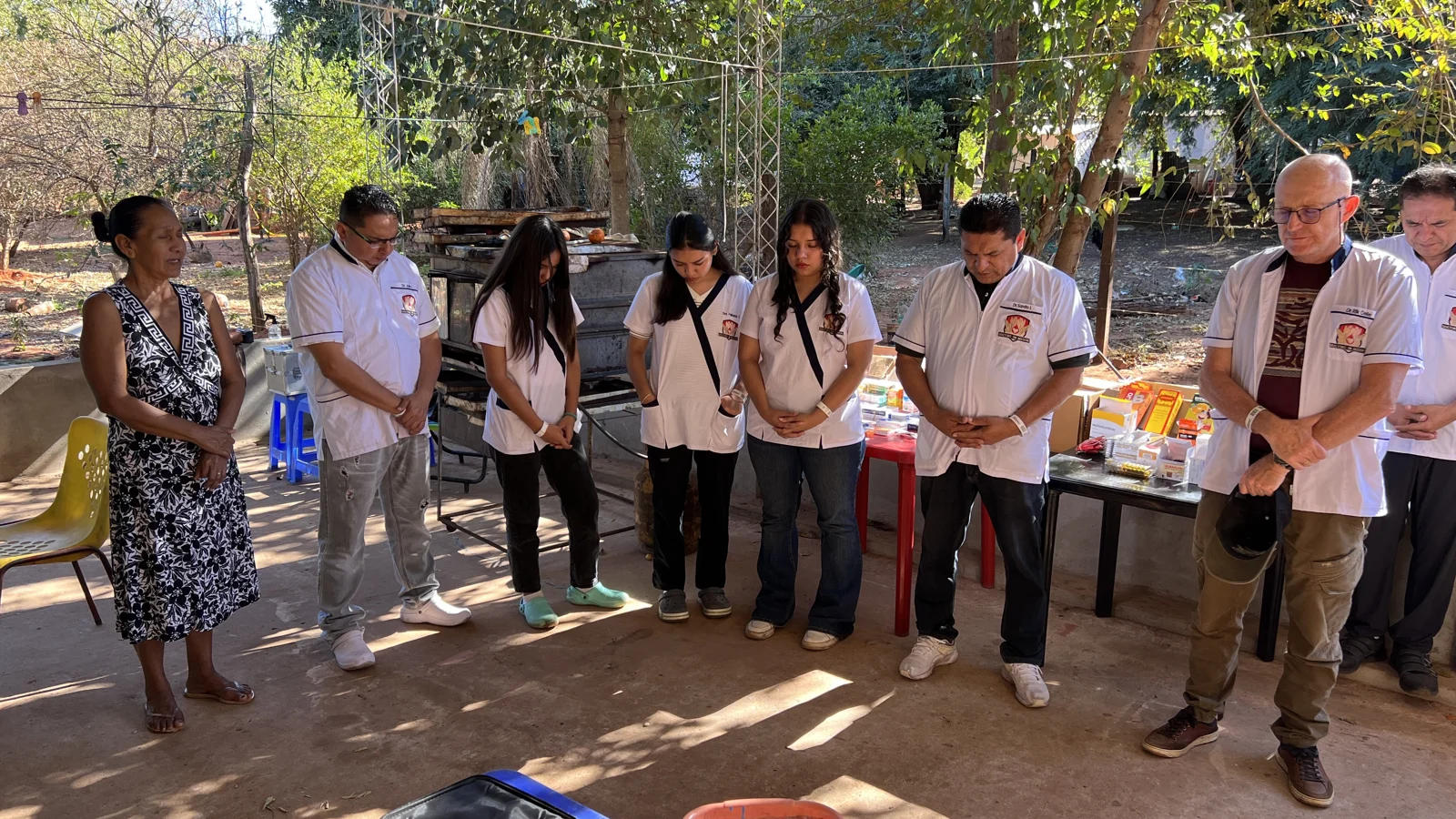
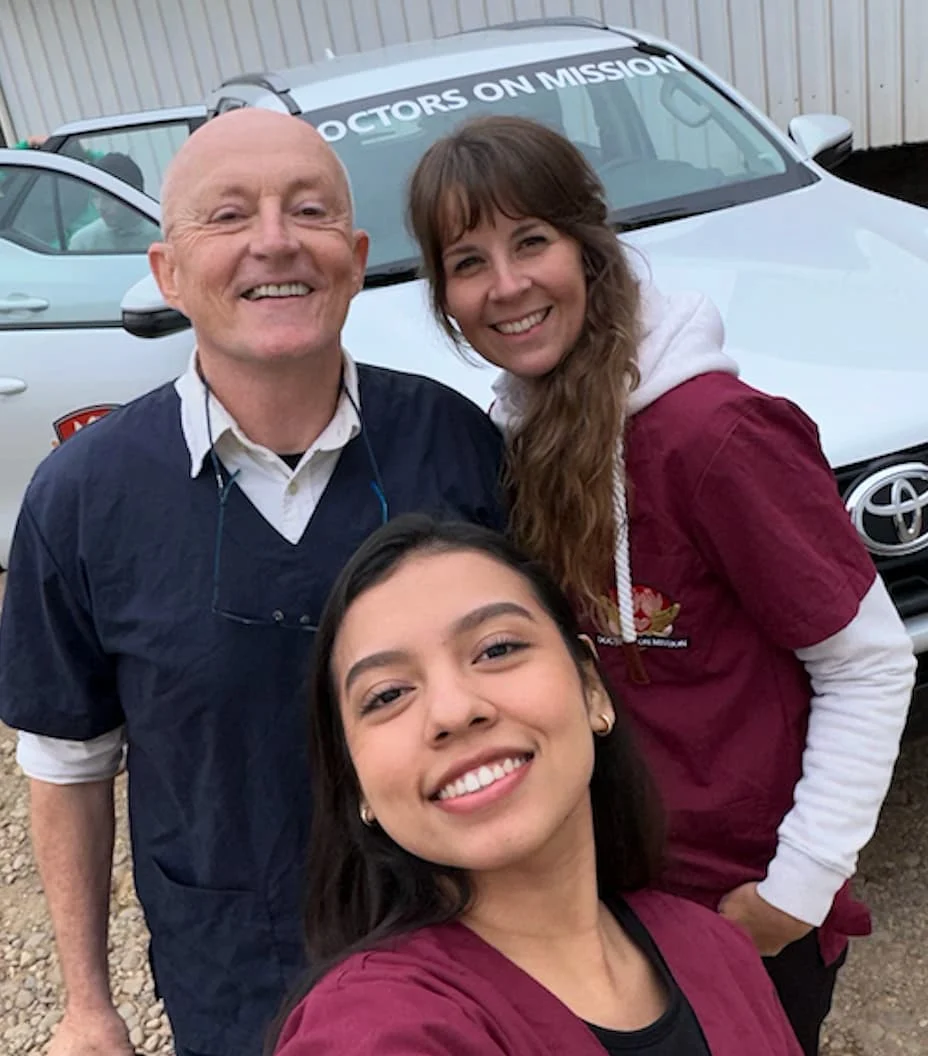
What touches and moves me most deeply is the commitment and the sacrifices of the medical team of Doctors on Mission.
Willy wrote: besides the Paicho area west of Tarija, they also visit the Chaco area east of it. They are building a medical centre on the edge of this city of 250,000 people. The ground floor is almost finished; money has yet to come in for the top floor. I am allowed to help a bit with my knowledge, in my rickety Spanish.
Three days in the mountains
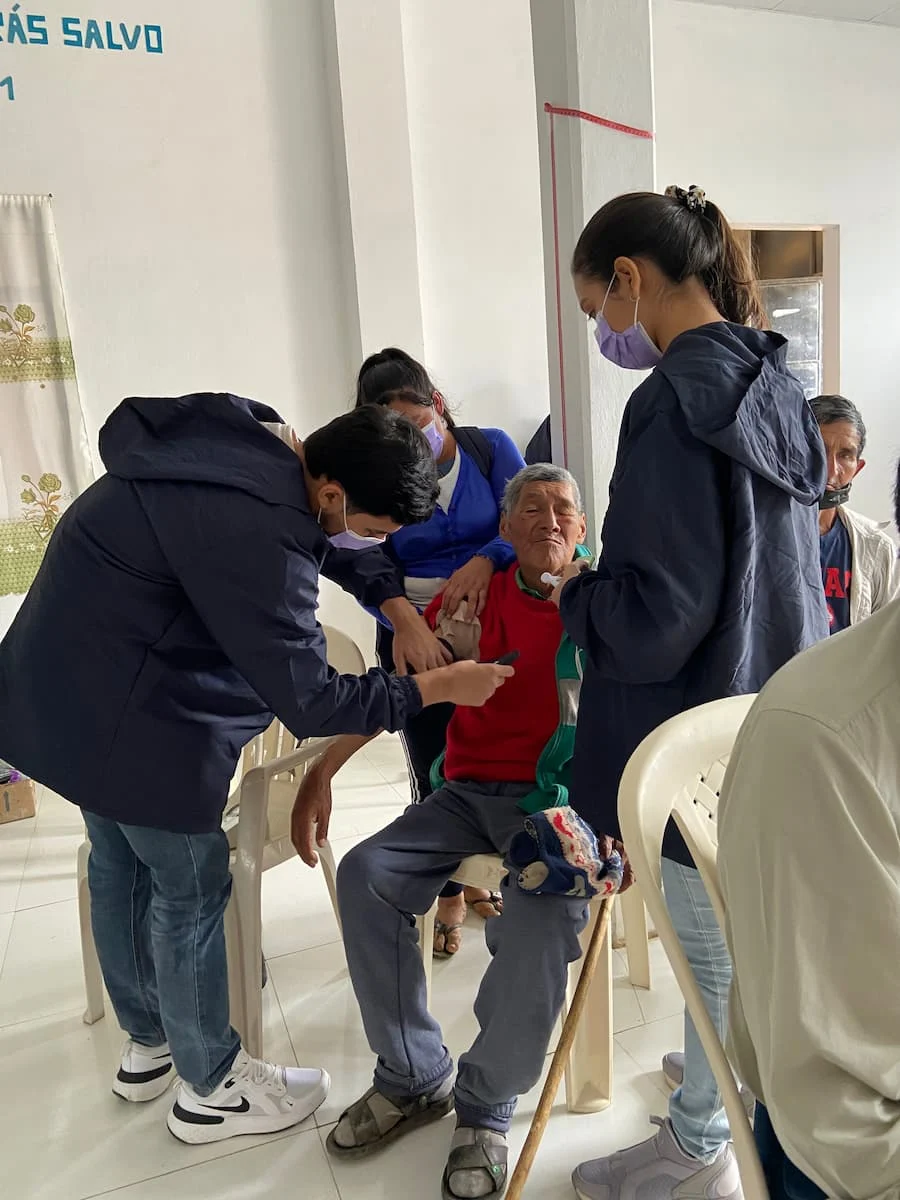
Two jeeps, three doctors, a dentist, a pastoral helper and Willy, on bumpy dusty mountain roads over a pass at 3,900 metres, with no straight stretch longer than fifty metres. They reached the Centro de Salud at Paicho Sud at 2,700 metres. Totally remote, he wrote, but later I would find there were many more remote villages still.
On Thursday they left for a hamlet called Condor: an hour and a half on narrow roads, kilometres through a dry riverbed, twice through a river. After hours of consultation, Doctor Oscar went on foot across the water and high into the mountains to reach people who could not come down to the school. He came back with wet shoes. By the return trip the rains at 4,000 metres had turned the river brown and dangerously high. They drove through it again.
At Potreras the children were brought in and, as in Belgium, weighed, measured, examined, everything registered. Exhausted, the doctors return to their posts, where a few more patients are waiting.
A different way into the Amazon
Threats keep coming from the Amazon region. They are unlawful, but I remain the target of an organised extortion there, and I cannot give details in writing. The alternative plan works. Instead of operating from Santa Ana de Yacuma, the work now runs from Santa Cruz, where we have begun working with Compassion International in Plan 3,000, the poorest district around the city. That base is our springboard, and from the north-east we can sail the rivers into the interior of Beni.
And the Andes base
Funds coming in are minimal, and for years the money going to Bolivia has exceeded the donations arriving. We have no debts, thanks to a single large gift from a Belgian businessman, but that fund is shrinking visibly. The monthly flow will be reduced by 57.2% over two years: difficult, but we believe achievable. The aim is not to withdraw from the Andes. Romulo, the guide par excellence when this work started twenty years ago, is making a huge effort to reach Azurduy, the region where he was born.