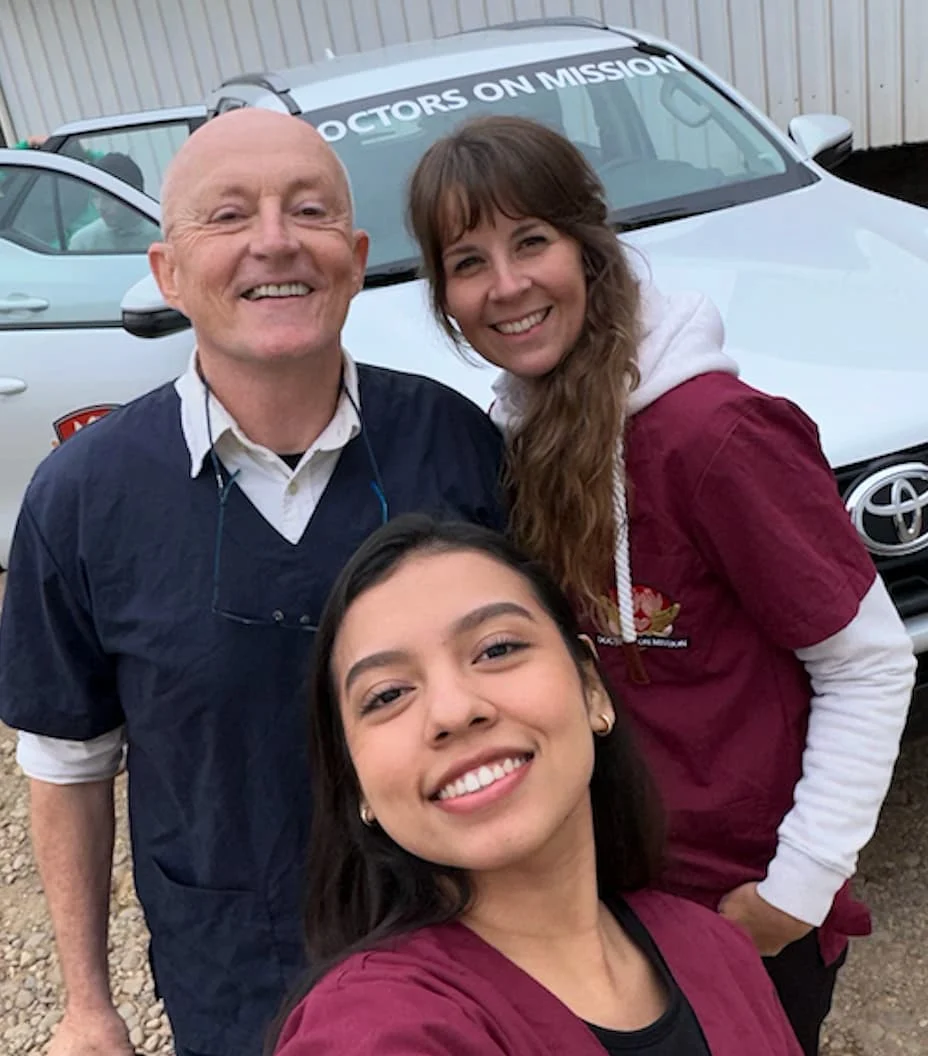
When the light finally turned green, we left this summer to help our local team of doctors at the Bolivian-Brazilian border. It became a difficult and dangerous medical mission that requires real perseverance, but the need from our local doctors was great.
The remote villages
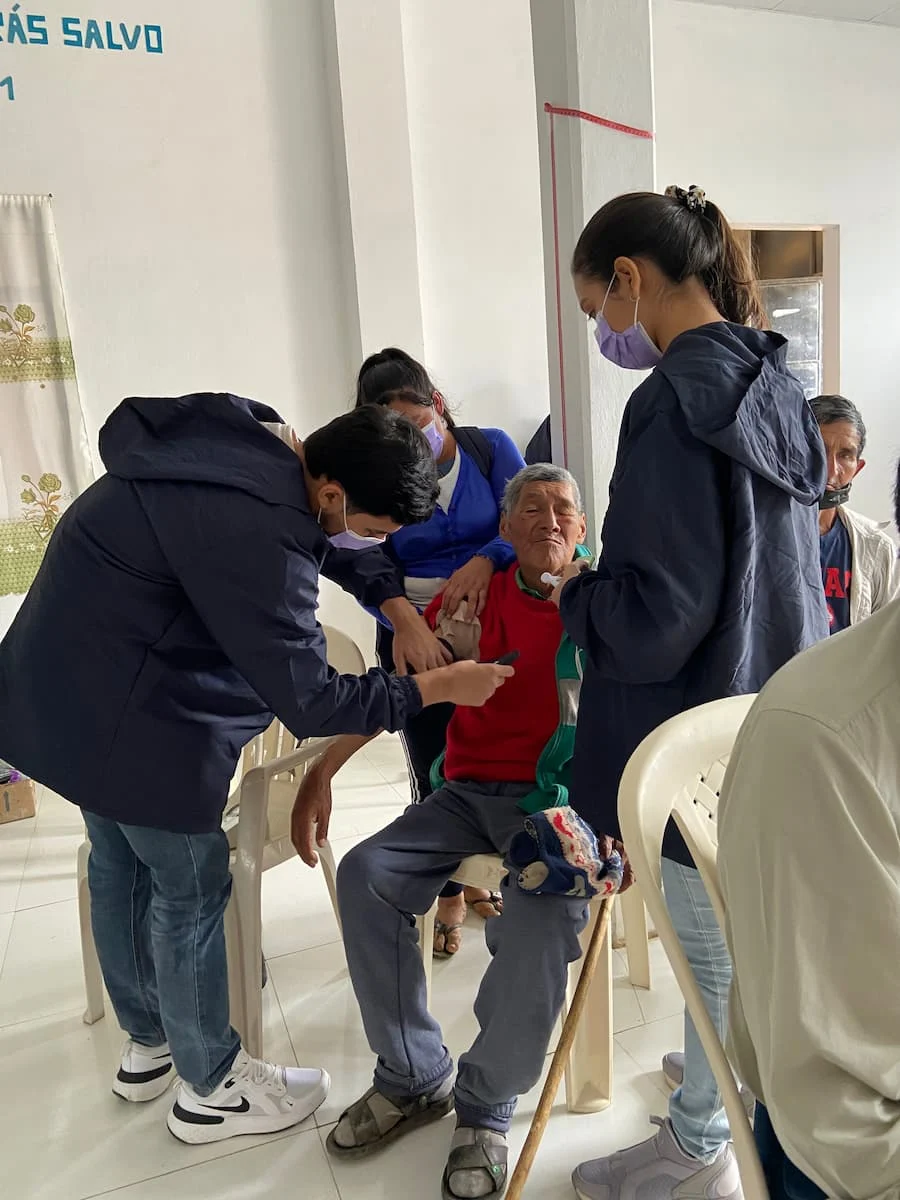
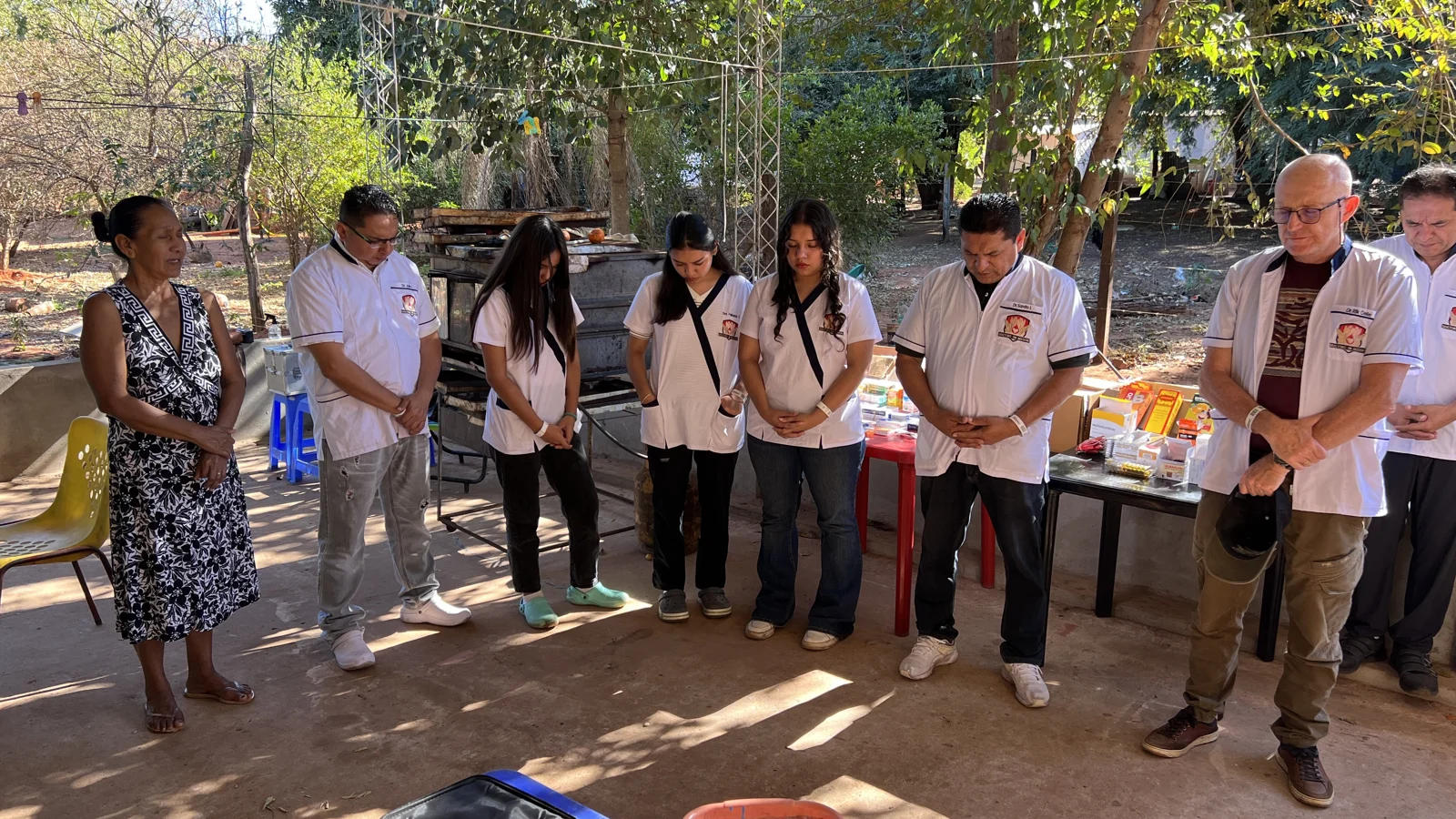
Many small villages had not been warned about the danger of the Brazilian variant, and health care in these remote places is really 0.0%. We went with our local Doctors on Mission team to help with prevention and treatment, bringing the necessary medication, homemade mouth masks, and the right mentality. On expedition to these poverty-stricken villages we found the variant had, for now, not hit too hard, because they lie so far from each other; we screened everyone for temperature and oxygenation, and brought the basic and tropical health care we usually bring.
These villages are isolated by distance, but could not escape other life-threatening diseases: the army had set up blockades and would not let people reach the areas where medical help was available, so many more died of other tropical illness. The poorest went without any care, food, water, or medicine for more than a year. Through many detours, a child with acute appendicitis was saved in the nick of time.
A fourth wave feared
After a second and third wave in which the Brazilian variant caused many deaths, a fourth is now feared with the delta variant, whose infections are starting to rise alarmingly. Brazil has more than 600,000 deaths from Corona, and Bolivia many tens of thousands too. In the larger Amazon towns we saw many new cemeteries, dug for the Corona dead, because there was also too little medical care such as oxygen; people sometimes die at 35 from low immunity caused by malnutrition or underlying tropical disease.
The work itself
The work is exhausting in temperatures of 35 degrees, protected by a double mouth mask, a face shield, and a specially made work suit. For lack of medical posts we worked outside, in the shade of a tree, and just before the rainforest we saw many makeshift refugee camps of people who had fled the Amazon to escape the pandemic. I suffered myself from a fairly serious viral syndrome, but for lack of blood tests we could not tell what it was; after about 10 days I was fortunately on the mend again.
The Andes base, and Haiti
At the request of the local authorities we have been using our large Andes base, at 3,200 metres, as a quarantine centre for a number of months. The funds were too limited this time to also go to Haiti, where things have grown dangerous too, with the assassination of the Haitian President and other murders and kidnappings; we do try to work online with the people we know there, and to sponsor when the need is great and we have the means.
The good news is that our local teams will continue the work without us, provided we have sufficient support.